
Dental Implants in Hutto, TX
A dental implant replaces a missing tooth's root and supports a crown that looks and works much like a natural tooth. We plan each implant on a 3D scan and explain your options, healing time, and costs before you decide.
Questions? (512) 806-7740 Call Text
Clinically reviewed by Han Nguyen, DDS Last reviewed
Replace Your Missing Tooth with a Dental Implant
If you’ve lost a tooth or teeth due to injury, periodontal disease, or some other reason, you may have assumed your only options were dentures or living with the gap. At Hutto Hippo Family Dental, Dr. Han Nguyen replaces missing teeth with dental implants that look, feel, and work much like natural teeth. We serve patients from Hutto, Taylor, Round Rock, Pflugerville, and Georgetown from our office just off US-79.
What Is a Dental Implant?
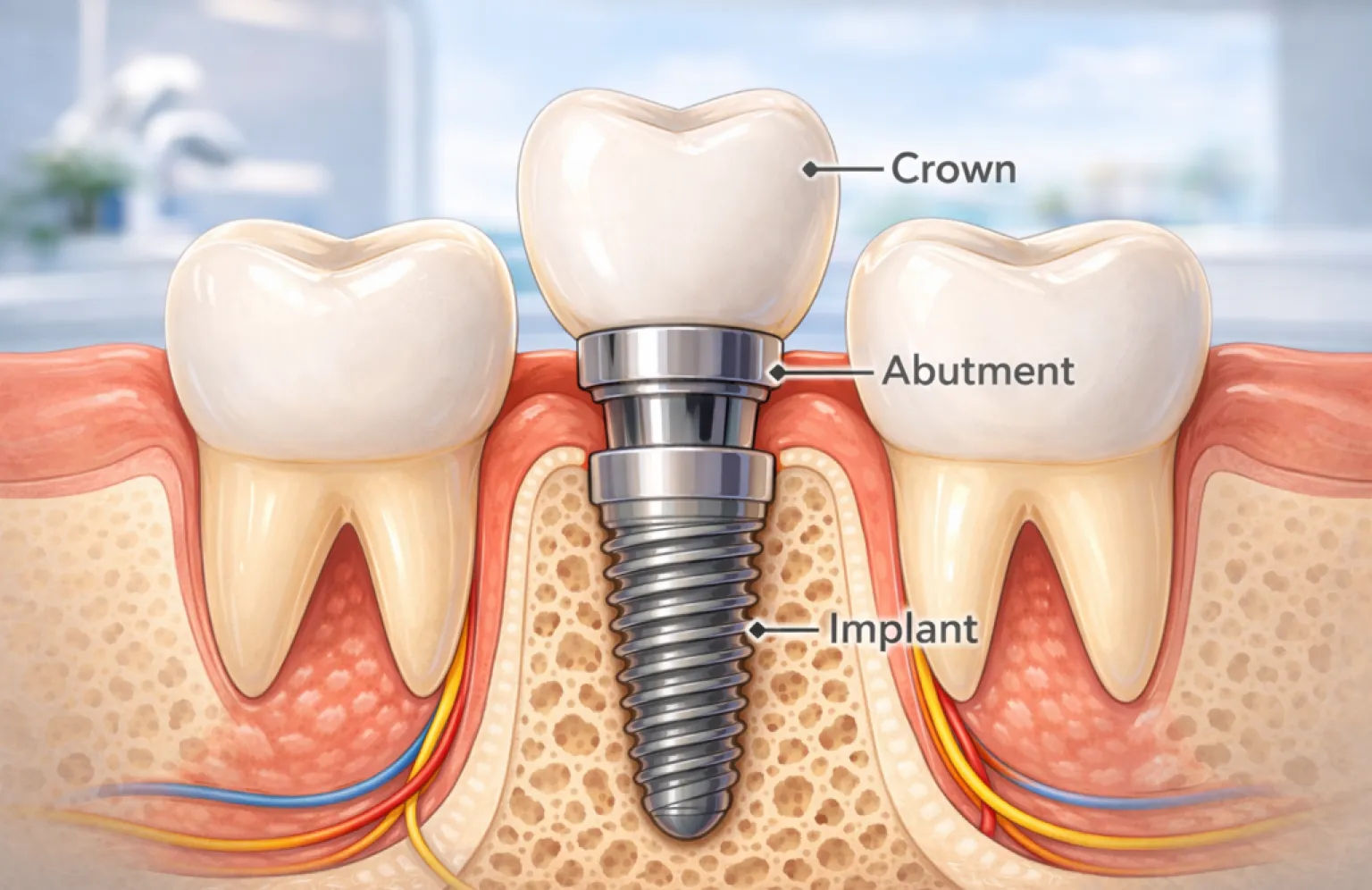
A dental implant has three parts:
- The implant — a small post, usually titanium, placed in your jawbone where the tooth root used to be
- The abutment — a connector that attaches to the top of the implant
- The crown — the custom, tooth-colored replacement tooth you see when you smile
Over a few months, your jawbone grows tightly around the implant (a process called osseointegration). That gives the new tooth a solid foundation. The benefits are significant:
- They don’t rely on neighboring teeth for support
- They are designed to be a long-term replacement that functions much like a natural tooth
- They look and feel natural
- They preserve jawbone health
Why Replace a Missing Tooth?
A gap isn’t only about how your smile looks. When a tooth is missing:
- The jawbone in that spot slowly shrinks, because nothing is stimulating it anymore
- Neighboring teeth can tip or drift into the space, changing your bite
- The opposing tooth can grow down (or up) into the gap
- Chewing shifts to other teeth, which puts extra wear on them
An implant replaces the root as well as the tooth, which is why it helps keep the jawbone in place.
Implant Options
- Single-tooth implant — One implant and one crown replace one missing tooth. Your neighboring teeth aren’t touched.
- Implant-supported bridge — When several teeth in a row are missing, two or more implants can hold a bridge, so you don’t need an implant for every tooth.
- Implant-supported dentures — If you wear (or need) a full denture, implants can anchor it so it doesn’t slip when you eat or talk. See dentures for more.
During your consultation, we’ll look at your 3D scan together and explain which options fit your mouth and budget.
Guided Implant Placement Technology
We plan every implant on a 3D scan before surgery day. Here’s how it works:
- We combine a 3D CAT scan with a 3D camera to take precise images of your mouth
- We design a custom implant using computer technology (a 15-minute appointment)
- A lab creates your custom mouthpiece guide and implant within 10 business days
- On surgery day, the guide helps place the implant precisely where it was planned
- Over the next few months, the implant bonds with your jawbone. Then we attach your custom crown
Planning in 3D first means more predictable placement and often a shorter, more comfortable surgery visit. The scan also shows how much bone you have, so we know ahead of time whether anything else is needed.
A Typical Implant Timeline
| Step | What happens | Timing |
|---|---|---|
| Consultation | Exam, 3D CAT scan, and a treatment plan with costs | First visit |
| Planning | Your implant and surgical guide are designed and made | About 10 business days |
| Placement | The implant is placed with the guide while you’re numb | One visit |
| Healing | The implant bonds with your jawbone | Several months |
| Crown | Your custom crown is attached | Final visit |
If a tooth still needs to be removed, or if you need a bone graft, healing time is added before or during these steps. We’ll give you a timeline for your own case.
Are You a Candidate for Dental Implants?
Most adults in good general health are candidates for dental implants. Ideal candidates:
- Have one or more missing teeth
- Have adequate bone density in the jaw to support the implant
- Have healthy gum tissue
- Do not smoke (smoking significantly reduces implant success rates)
Patients with certain health conditions — such as uncontrolled diabetes — may need to address those conditions before implant placement. If you have gum disease, we’ll treat it first. We will thoroughly evaluate your situation during the initial consultation.
What If I Don’t Have Enough Bone?
Bone can shrink after a tooth has been missing for a while. That doesn’t always rule out an implant. Sometimes a bone graft is placed first to rebuild the area, and sometimes a different implant position or size works. Your 3D scan shows us what’s possible before any treatment begins.
Recovery After Implant Placement
Most patients find implant placement easier than they expected:
- First day or two: Some swelling and tenderness is normal. Over-the-counter pain relievers usually control it, and an ice pack on the cheek helps.
- First week: Eat soft foods and chew on the other side. Keep the area clean as we instruct.
- While it heals: You’ll go about your normal life. If the implant is in a visible spot, we’ll talk about a temporary replacement so you’re not left with a gap.
Many people return to work the next day. Call us if swelling or pain gets worse after the first few days.
Like any surgery, implant treatment has some risks, such as infection, or an implant that doesn’t bond with the bone and has to be replaced. Not smoking, keeping the area clean, and coming to your follow-up visits all lower those risks. We’ll go over the risks for your case before you decide.
Making Implants Affordable
An implant costs more up front than a bridge or partial denture, but it’s designed to last for many years and doesn’t put extra work on your other teeth. Your cost depends on:
- How many teeth are being replaced, and which option you choose
- Whether you need an extraction or a bone graft first
- Your dental insurance benefits
Some plans cover part of the implant or the crown on top. We accept and file most dental insurance plans. We can’t accept HMO or Medicaid plans, and we’re out-of-network with Delta Dental (you pay at the visit, and Delta usually reimburses you). Before treatment we’ll check your benefits and give you a written estimate. It’s our best estimate of what your plan will pay, not a guarantee. We also offer flexible payment plans and an in-house dental plan. See our insurance and payment FAQs for details. You’ll get your written estimate at your consultation, before any treatment begins. If you’re replacing several teeth, we can talk about doing treatment in stages.
Caring for Your Dental Implants
Implants need good daily cleaning, and we’ll show you the best way to clean around yours:
- Brush twice daily and clean around the implant every day with floss, a small cleaning brush, or a water flosser
- Visit us for regular cleanings and checkups
- Avoid chewing on ice or hard objects that could crack the crown
- If you grind your teeth, ask us about a night guard
Implants can’t get cavities, but the gums around them can still get infected. That’s why cleanings and checkups matter. With proper care, dental implants can last for many years.
Frequently Asked Questions About Dental Implants
How long do dental implants last? With proper care, dental implants can last for many years. The crown attached to the implant may need replacement after 15–25 years due to normal wear, while the implant post itself is designed to stay in place long-term.
Is the dental implant procedure painful? We numb the area before treatment. You may feel pressure, but tell us if anything hurts so we can help. Most patients compare the sensation to having a tooth filled. Post-procedure discomfort is typically mild and resolves within a few days with over-the-counter pain medication.
How much do dental implants cost? The cost varies based on how many implants are needed and whether any preparatory work (such as bone grafting) is required. We accept and file most dental insurance plans and offer financing options. We will provide a detailed cost estimate at your consultation.
How long does the whole implant process take? Usually a few months from placement to the final crown, because the implant needs time to bond with your jawbone. Extractions or bone grafts can add time. We’ll give you a timeline for your own case at your consultation.
Can I get an implant right after a tooth is pulled? Sometimes. It depends on the tooth, any infection, and how much bone is there. In other cases, the area heals first and the implant is placed later. Your 3D scan helps us decide.
Am I too old for dental implants? Age by itself usually isn’t the deciding factor. Your general health and your jawbone matter more. Many older adults get implants, especially to stabilize dentures.
How do implants compare to dentures or bridges? Implants are a fixed, long-term option. Unlike dentures, they do not slip or require adhesive. Unlike dental bridges, they do not require altering healthy adjacent teeth. Implants also stimulate the jawbone, which helps prevent the bone loss that follows tooth extraction.
Related Services
If you’re missing teeth or have severely damaged teeth, these services may also be relevant to your care:
- Dental Bridges & Crowns — restore one or more missing teeth without implants
- Dentures — full or partial tooth replacement options, including implant-supported dentures
- Sedation Dentistry — nitrous oxide to help you relax during treatment
- Cosmetic Dentistry — finishing touches after implant placement
Ready to restore your smile? Contact us today to schedule a consultation.
Ready for a healthier smile?
Schedule your appointment today. We accept and file most dental insurance plans and offer flexible payment options. New patients are always welcome!