
Dental Bridges & Crowns in Hutto, TX
A crown covers and protects a damaged tooth. A bridge fills the gap left by a missing tooth using the teeth on either side. Both are fixed in place and made to match your natural teeth.
Questions? (512) 806-7740 Call Text
Clinically reviewed by Han Nguyen, DDS Last reviewed
Restore Your Smile with Bridges and Crowns
Dental crowns and bridges are two of the most common and effective ways to restore damaged, decayed, or missing teeth. At Hutto Hippo Family Dental, Dr. Han Nguyen designs natural-looking, long-lasting restorations for patients from Hutto, Taylor, Round Rock, Pflugerville, and Georgetown. A crown repairs a tooth you still have; a bridge replaces a tooth you’ve lost.
Dental Crowns
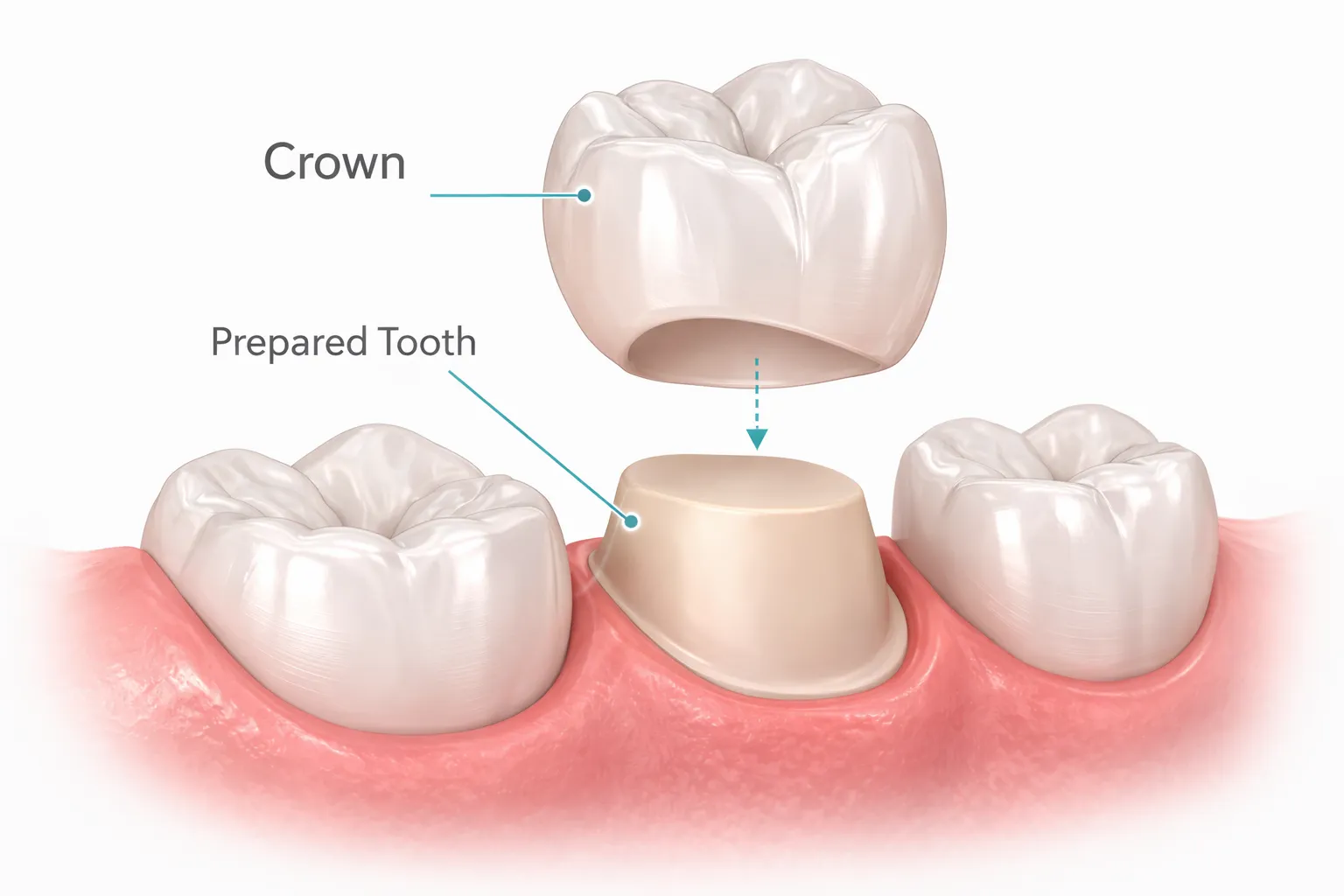
A dental crown (also called a cap) is a tooth-shaped covering placed over a damaged tooth. Crowns are used to:
- Protect a weak or cracked tooth from breaking
- Restore an already broken or severely worn tooth
- Cover and support a tooth with a large filling
- Protect a tooth after root canal therapy
- Hold a dental bridge in place
- Cover a dental implant
- Improve the appearance of a discolored or misshapen tooth
Signs You May Need a Crown
- A tooth that hurts when you bite down, or a sharp pain that comes and goes when chewing (often a crack)
- A large, old filling that is breaking down or has decay around its edges
- A chipped or broken tooth
- A back tooth that has had a root canal
- Teeth worn down from grinding
Only an exam and X-rays can tell for sure. Sometimes a filling or bonding is enough, and we’ll tell you if a crown isn’t needed.
What to Expect at Your Crown Visits
A crown usually takes two visits:
- Exam and X-rays — We check the tooth, its root, and the surrounding bone, and explain your options.
- Preparing the tooth — The area is numbed. We remove any decay and shape the tooth so the crown fits over it.
- Impressions — We record the shape of the prepared tooth and your bite so the crown is made to fit precisely and match the color of your nearby teeth.
- Temporary crown — You leave with a temporary crown that protects the tooth while your permanent crown is made.
- Placing your crown — At the second visit we remove the temporary, check the fit, color, and bite, then cement the permanent crown in place.
Your tooth may be a little sensitive to cold for a few days afterward. If your bite feels “high” or uneven once the numbness wears off, call us; a quick adjustment fixes it.
Dental Bridges
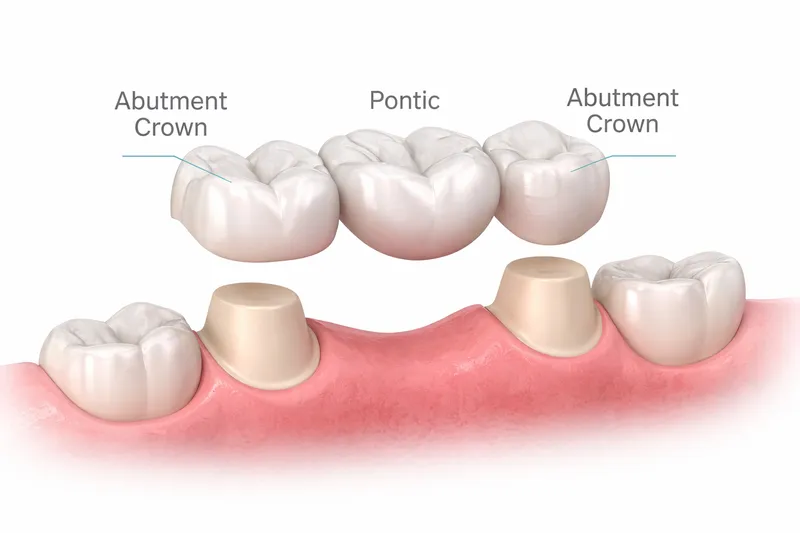
A dental bridge literally “bridges” the gap left by one or more missing teeth. A typical bridge consists of two crowns on the anchor teeth on either side of the gap, with one or more artificial teeth (called pontics) in between. The bridge is cemented in place, so unlike a partial denture it doesn’t come out.
Benefits of dental bridges include:
- Restore your ability to chew and speak properly
- Maintain the shape of your face
- Distribute the forces of your bite properly
- Prevent remaining teeth from drifting out of position
Types of Bridges
- Traditional bridge — Crowns on the natural teeth on both sides of the gap hold the replacement tooth. This is the most common type and works well when the neighboring teeth are healthy enough to support it, especially if they already need crowns.
- Implant-supported bridge — When several teeth in a row are missing, dental implants can anchor the bridge instead of natural teeth, so your healthy teeth don’t need to be reshaped.
Traditional Bridge or Implant?
If a tooth is missing, a traditional bridge and an implant are the two fixed (non-removable) ways to replace it. Here is how they compare:
| Feature | Traditional bridge | Implant |
|---|---|---|
| Neighboring teeth | Reshaped to hold crowns | Left untouched |
| Surgery | No | Yes, a minor procedure to place the implant |
| Typical timeline | Usually two visits | Several months, including healing time before the final crown |
| Removable | No | No |
A bridge is often a good choice when the teeth next to the gap already have large fillings or crowns, or when you’d like to avoid surgery. An implant is often preferred when the neighboring teeth are healthy. During your exam we’ll talk through which option fits your teeth, health, and budget.
What Materials Are Used?
Modern crowns and bridges are made from materials chosen to balance durability, appearance, and function:
- Porcelain-fused-to-metal (PFM) — Strong with a natural appearance; the metal substructure provides durability while the porcelain mimics tooth color
- All-ceramic / all-porcelain — Excellent aesthetics with no metal; ideal for front teeth
- Zirconia — An extremely strong ceramic material; excellent for back teeth that endure heavy biting forces; highly biocompatible
We will recommend the best material based on which tooth is being restored, your bite, and your aesthetic goals.
How Long Do Crowns and Bridges Last?
With good care, many crowns and bridges last 10–15 years or longer. How long yours lasts depends on:
- Your home care — Decay can still start where the crown meets the natural tooth, so brushing and cleaning along the gum line matters.
- Grinding and clenching — Nighttime grinding is hard on any restoration. If you grind, ask us about a night guard.
- Habits — Chewing ice, pens, or hard candy can chip porcelain.
- Regular checkups — At your cleanings we check the edges of your crowns and bridges so small problems are caught early.
Caring for Bridges — A Note on Flossing
One important maintenance step for dental bridges: you cannot floss between a bridge and the teeth it spans the traditional way. Instead, use:
- Floss threader — Thread floss under the pontic and clean below the gum line
- Water flosser — Effectively removes debris without maneuvering floss
- Small cleaning brush (interproximal brush) — Tiny brushes designed to clean under bridges
Cost and Insurance
The cost of a crown or bridge depends on the material, how many teeth are involved, and whether the tooth needs other treatment first, such as a root canal or a core build-up (rebuilding the tooth underneath the crown). Many dental plans cover part of the cost of a crown or bridge that’s needed to restore a tooth. Crowns placed only for cosmetic reasons may not be covered.
We accept and file most dental insurance plans. We can’t accept HMO or Medicaid plans, and we’re out-of-network with Delta Dental (you pay at the visit, and Delta usually reimburses you). Before treatment we’ll check your benefits and give you a written estimate. It’s our best estimate of what your plan will pay, not a guarantee. We also offer flexible payment plans and an in-house dental plan. See our insurance and payment FAQs for details.
Frequently Asked Questions About Crowns and Bridges
Does getting a crown hurt? We numb the area before treatment. You may feel pressure, but tell us if anything hurts so we can help. After the numbness wears off, mild soreness for a day or two is normal.
How long does it take to get a crown? Most crowns take two visits. At the first, we prepare the tooth and place a temporary crown; at the second, we cement your permanent crown.
Can a crown fall off? Crowns are securely cemented, but they can occasionally loosen over many years. If your crown feels loose or comes off, keep it somewhere safe and call or text us at (512) 806-7740. Never use super glue or household glue. If you can’t be seen right away, temporary dental cement from a pharmacy can protect the tooth for a short time; see our emergency dental care page for what to do until we can see you.
What is the difference between a crown and a filling? A filling repairs a small damaged area of a tooth. A crown covers the entire visible tooth, providing full protection. Crowns are used when a tooth is too damaged for a filling to be effective.
Can I eat normally with a temporary crown? Yes, but be gentle. Chew on the other side when you can, and avoid sticky foods like caramel and gum, which can pull a temporary crown off. When you floss, slide the floss out to the side instead of pulling it back up.
Is a bridge or an implant better for a missing tooth? Both are fixed and look natural. A bridge is usually faster and avoids surgery, but it requires reshaping the teeth on either side of the gap. An implant doesn’t affect neighboring teeth but takes several months to complete. We’ll help you weigh the options for your situation.
Does insurance cover crowns and bridges? Many dental plans cover part of the cost when a crown or bridge is needed to restore a tooth. We file most dental insurance plans (not HMO or Medicaid plans) and will give you an estimate of your share before treatment.
Related Services
Bridges and crowns often work alongside other restorative treatments:
- Dental Implants — an implant crown replaces a missing tooth root-and-all with no impact on adjacent teeth
- Root Canal Therapy — root canal-treated back teeth usually need a crown for long-term protection
- Dentures — a removable option when several teeth are missing
- Cosmetic Dentistry — crowns can also serve aesthetic purposes, such as correcting severely discolored or misshapen teeth
Contact us today to find out whether a bridge or crown is the right solution for you.
Ready for a healthier smile?
Schedule your appointment today. We accept and file most dental insurance plans and offer flexible payment options. New patients are always welcome!